Showing posts with label Sirius Star. Show all posts

Monday, April 5, 2010

Pirates Capture Largest Vessel Ever: Supertanker Samho Dream


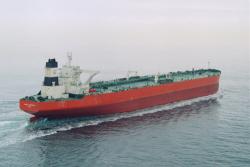
MT Samho Dream

In another audacious attack, suspected Somali pirates seized the supertanker Samho Dream early Sunday morning while she was sailing in the Indian Ocean, some 1500 kilometres southeast of the Gulf of Aden. The VLCC was sailing from Iraq to Louisiana with about 2 million barrels of crude oil in its holds at the time of the attack. The cargo is reportedly valued at around $170 million (US). The VLCC did not have any armed guards aboard her, as she was steaming in waters not normally known to be high risk seas for pirate attacks. (The vessel would have been bound for southern Africa on its journey to the United States, as it is too large to transit the Suez Canal.)

With this incident, pirates have captured the largest vessel ever successfully attacked. The previous record was for the supertanker Sirius Star, which was seized November 15, 2008 and released in early January, 2009, after a ransom of some $3 million was paid to the pirates. The Samho Dream is just slightly larger than the Sirius Star, weighing in at 319,360 DWT and being 333 metres in length (according to MarineTraffic.com). Sunday's attack occurs almost a year after the Maersk Alabama incident, the anniversary of which is later this week.

And, in that peculiar way that global shipping works, there are a number of nations with active interests in the vessel: The Samho Dream is flagged in the Marshall Islands, owned by a Singaporean firm, operated by a South Korean company, crewed with mariners from South Korea and the Philippines and carrying cargo owned by American refiners Valero Energy Corp. A South Korean destroyer has reportedly been dispatched to shadow the supertanker as it makes it way towards the Somali coastline.

Last September I mused about the rising tide of ransoms being received by pirate gangs, and wondered if we'd see a $5 million ransom paid before Christmas (2009). I was slightly off in that prediction: The supertanker Maran Centaurus was captured by Somali pirates in mid-November and released on January 19 of this year, and the ransom paid was somewhere between $5.5 and 7 million.

Regardless, if the captors of the Samho Dream manage to get the tanker to Somali waters and begin negotiations for her release, we can expect to see a new record for the ransom requested. Will the pirates be paid? Probably. But should they be paid? That's the hard question. With 24 mariners aboard the supertanker, it is their lives that will hang in the balance as a ransom is discussed and, clearly, their lives are worth whatever it takes to be freed.

However, each time ransoms are paid - and go up and up - they imperil the lives of other mariners who sail those waters. It's why there are reported to be at least 24 vessels currently being held by Somali pirates, with about 358 hostages awaiting freedom from their enforced captivity. The maritime criminals operating in that part of the world are betting on garnering a lot of money, and, so far, they've been wildly successful doing so. At some point, the paying of ever more exorbitant ransoms has to be curtailed, just as the means by which the shipping world and the international community finds better way to stem these attacks.

Monday, November 30, 2009

US-bound supertanker seized by Somali pirates

MV Maran Centaurus
(photo: Joao Quaresma, vesseltracker.com)

In the most audacious attack of the year, Somali pirates have captured the supertanker Marana Centaurus yesterday as it was sailing in the Indian Ocean about 600 nautical miles (800 miles) northeast of the Seychelles. According to the initial EU NAVFOR note posted this afternoon, the Greek-flagged tanker was headed for New Orleans from the Saudi-port of Jiddah, on the Red Sea, at the time of the hijacking. According to the Times Online, the vessel was boarded by nine pirates who overpowered the crew of 28 (15 Filipinos, 9 Greeks, 2 Ukrainians and one Romanian). The tanker's crew were unarmed and there were no security personnel aboard. EU NAVFOR says the supertanker is currently making course towards Somalia, possibly to Haradheere or Hobyo, and is being followed by a Greek warship that happened to be in the region with the European Union counter-piracy operation.

The seizure of the Maran Centaurus and her crew comes one year after another supertanker - the Saudi-owned Sirius Star - was captured by Somali pirates. That earlier incident began on November 15, 2008, as the Sirius Star was in the same general area en route to the U.S. with two million barrels of crude, and wasn't resolved until January 9 of this year, following the payment of a $3 million ransom.

According to Bloomberg.com and the BBC, the Maran Centaurus was fully laden when boarded yesterday, and also has the capacity to carry two million barrels of crude. Tankers of this size cannot transit the Suez Canal while fully laden, so they must still take the long way around southern Africa to reach markets. The attack yesterday may be the furthest from shore carried out by pirates, who have been increasing their range by using motherships and better intelligence to augment their weaponry and nautical skills.

The captive crew of the supertanker now join more than 250 other individuals currently being held by Somali pirates (and around a dozen vessels). There is currently no word of what the ransom demands are on the part of the pirates. However, it can be expected to be high, likely the highest so far requested.

As I wrote two weeks ago, the financial stakes have already been raised by the paying of a hefty ransom to free the Spanish fishing boat Alakrana, which was released after the pirates received about $3.5 million, a higher sum than was paid to release the supertanker Sirius Star in January. Supply and demand, pirate inflation, whatever you call it, the amounts being paid to Somali pirates keep going up. In that earlier post, I also offered the idea that we would see a $10 million ransom demanded - and paid - before next Spring. Perhaps I should have said before the end of the year?

UPDATE: According to the Louisiana-based Nola.com site, the tanker was not headed for New Orleans, as earlier reported. Instead, the Maran Centaurus was supposed to deliver its cargo of crude to the Louisiana Offshore Oil Port (LOOP), a fuel delivery platform located about 18 miles south of Grand Isle, in the Gulf of Mexico. On a good day, LOOP takes in about ten percent all the petroleum imported into the United States, or a million barrels (US daily imports of petroleum total just shy of 10 million barrels a day, according to the Energy Information Administration). That means the crude oil aboard the captured supertanker represents a fifth of daily American imports. The oil has been valued at just over $20 million.

Addendum: The BBC implies that one reason the Maran Centaurus was able to be boarded was she could not steam very fast due to her full load of crude, being only able to make "between 11-15 knots". This is not completely corrrect. The ship's particulars on the website of a broker affiliated with her owners show the top speed of the Maran Centaurus is only 15 knots, so she may have been going as fast as she was able when attacked.

Monday, September 14, 2009

Sign of pirate ransom demands going up?

MV Irene E.M. (photo: Roberto Smera/Associated Press)

After being held by Somali pirates for five months, reports say that a Greek-owned bulker and her crew of 21 Filipino mariners have finally been set free. The MV Irene E.M. was seized on April 13 while sailing through the Gulf of Aden and then held off the northeastern coast of Somalia as negotiations dragged on to release the vessel and her crew. The capture of the bulk carrier occurred just one day after the dramatic rescue of the Maersk Alabama's captain, Richard Phillips, by US Navy forces. Unfortunately for the Filipino crew of the Irene, no special forces teams were able to effect a rescue mission, so the mariners had to endure a lengthy period as prisoners in conditions that must have been abysmal. (Photo below was released by the pirates in mid-August and comes from the blog Unheard No More!, one of a number of sites that tried to keep the crew's plight in the public eye.)
According to Reuters, the Somali pirate gang that held the Irene netted a ransom of about $2 million, a sum that places this incident in the upper echelons of amounts paid to free a vessel and its crew. By comparison, the captors of the supertanker MT Sirius Star - freed last January after being held by pirates for two months - received a ransom of about $3 million. But the supertanker was a much more valuable target than the Irene in terms of the value of the vessel and its cargo of crude oil (the Sirius Star itself was worth about $150 million and the crude another $100 million).

News that the crew of the Irene is finally free is, of course, most welcome. Yet the hefty ransom that was reportedly paid to the pirates may be an ominous sign that future demands will be higher than previously seen. If a somewhat older bulker like the Irene can garner $2 million for criminal gangs, what of a newer vessel, a container ship or another tanker? Granted there's a bit of supply and demand going on here: Somali pirates have only been holding a handful of vessels these last few months, so they may have asked for more in this case because they had few other prospects (see the Reuters FactBox here for an update on vessels currently believed to be in pirate hands).

On the other hand, we could be seeing initial signals that inflation has seeped into the local pirate economies in the Horn of Africa. About five years ago, the MV Irene would likely have been freed for a far lower sum, perhaps $100-250,000; two years ago, maybe $500-750,000; last year, probably a million dollars, at best. Looking at this particular incident and others from earlier this year, it seems entirely conceivable that we'll see an incident in the near future - before Christmas - in which someone will end up paying $5 million to pirates in order to secure the release of a ship, and its hostages.

The only saving grace in all this is that every economic boom eventually undergoes a "correction", as so many people around the world have witnessed in the last year (September 15 marking the one year anniversary of the collapse of Lehman Brothers). At some point, the bubble must burst, and this is as true for Somali pirates as anyone else. One scenario could see so many vessels being held captive in the coming months that their overall bargaining value diminishes for the pirates, though there is a quantitative aspect, too: Even if you have to reduce your demands for a vessel similar to the Irene to just a million dollars, having a few more prizes under your control can still make the economic bottom line pretty profitable.

Still, for the short term things appear rosy for pirates and greed will drive them to resume their seagoing operations off the Horn of Africa and demand ever more exorbitant pay-offs. The worry here is that a shipowner will eventually refuse to accede to those demands and someone will get killed - most likely a seafarer. This in no way condones the paying of ransoms, but is merely a harsh assessment of what may come to pass as pirates resume their operations off East Africa.

Thursday, November 27, 2008

Hijacked supertanker Sirius Star's position identified

Britain's Guardian newspaper paid to have a satellite pass over the waters off Somalia where the pirate-hijacked supertanker Sirius Star was believed to be anchored and found the vessel. The tanker's position is given as latitude 4.595 N, longitude 48.085 E. A low rez image is below.

Supertanker Sirius Star visible to the extreme right (GeoEye/Guardian image)

In related news, Military.com is reporting that the negotiations with the pirates holding the supertanker are now being carried out by an American businesswoman, Michele Lynn Ballarin. Ballarin's Virginia-based firm makes body armor and provides executive protection services and she has extensive experience with Somalia, forging connections fostered through years of travel there.

Thursday, November 20, 2008

Hijacked supertanker's ransom announced

It is now being reported that the Somali pirates holding the Saudi supertanker Sirius Star are demanding a ransom of $25 million (US). That's a surprisingly small sum for a vessel and cargo valued at a quarter billion dollars, and a likely sign that the pirates want to be paid quickly and release the tanker.

Wednesday, November 19, 2008

Piracy and the Law

In the last 24 hours, two more vessels were hijacked off East Africa and a pirate ship was blown out of the waters. Interesting developments as we watch the ongoing situation off Somalia in the wake of the seizures of the supertanker MV Sirius Star this past weekend and the freighter transporting T-72 battle tanks, the MV Faina, two months ago.

The hijacking of a Greek bulk carrier yesterday shows there is no respite in the current pirate campaign against mariners. A Thai fishing was also reported to have been attacked, and is now in the hands of Somali pirates. No doubt the anger is growing in commercial, governmental and security establishments to do something about the crisis (for that it what has become), and we are already hearing of upcoming deployments of warships from participants eager to augment the naval vessels already in the area.

Some wonder if these naval forces may take a more pro-active role - such as sending Special Forces teams to board hijacked vessels and free them - however this is an unlikely scenario. The question is: If naval forces were to board the Sirius Star and rescue her crew, would these same forces be used to free every other ship held by pirates? Or would it only be the largest and most valuable merchant ships that are considered worthy of rescue? When France sent commandos to Somalia to deal with pirates - twice, I might add - their activities were limited to dealing with French vessels, not those of any other nation. It's an important question to address, for the Sirius Star and her crew should not be considered more important than that Thai fishing boat and its crew.

Meanwhile, I'd like to point readers to an excellent piece written at the EagleSpeak blog that talks about the legal aspects of modern day piracy. It's well worth a look.

Monday, November 17, 2008

Somalia: How big can you go?

Somali pirates have seized their largest prey to date, a 318,000 dwt supertanker. The MV Sirius Star was sailing about 420 nautical miles southeast of Mombasa, Kenya, on Sunday when a group of armed men boarded her and seized control of the immense vessel and took hostage its crew of 25. The vessel was reported to be sailing with a full load of 2 million barrels of crude, bound from the Middle East to the United States. The tanker was taking the long route around South Africa’s Cape of Good Hope, avoiding the more dangerous pirate haunts in the Gulf of Aden.


This marks another note-worthy incident by pirates in that part of the world, for a number of reasons: First, the size of the Sirius Star is notable, with the seizure making this one for the record books. At 330-metres (1080 feet), the tanker is among the longest vessels plying the world’s oceans, the same size as a nuclear-powered aircraft carrier. The tanker – a very large crude carrier (VLCC) – is operated by Vela International Marine, the shipping arm of the state-owned firm Saudi Aramco, and has a multinational crew hailing from Great Britain, Croatia, Poland, the Philippines and Saudi Arabia. Given the tanker’s size, the pirates who took control would have to rely on the professional mariners aboard the Sirius Star to operate the vessel. And there is no harbour in Somalia that can accommodate a VLCC like this, nor are their any refineries in the country able to process the crude. (It is reported by new agencies like AFP that the Sirius Star is headed towards the pirate stronghold of Eyl.)

The fact that the vessel was hijacked so far south, in an area where there had previously been little activity by Somali pirates, points to a new theatre of operations for maritime criminals. Coming on the heels of several other attacks in the last week, the seizure of the Sirius Star occurred in waters where there is little in the way of an international naval presence; the majority of warships are patrolling the waters around the Horn of Africa. This enlarges the area that will now be considered dangerous due to piracy, and should attacks continue in this region it will require the deployment of additional naval forces to properly address the situation.

Finally, taking control of an oil tanker represents an attempt to increase dramatically the ransom demands. The crude oil is reported to have a value of $100 million; the vessel is newly built – it made it maiden voyage from a South Korean shipyard in March of this year – and has a book value that will be in excess of $100 million. Expect to hear ransom demands that are higher than those being asked for the MV Faina and her cargo of Soviet tanks.